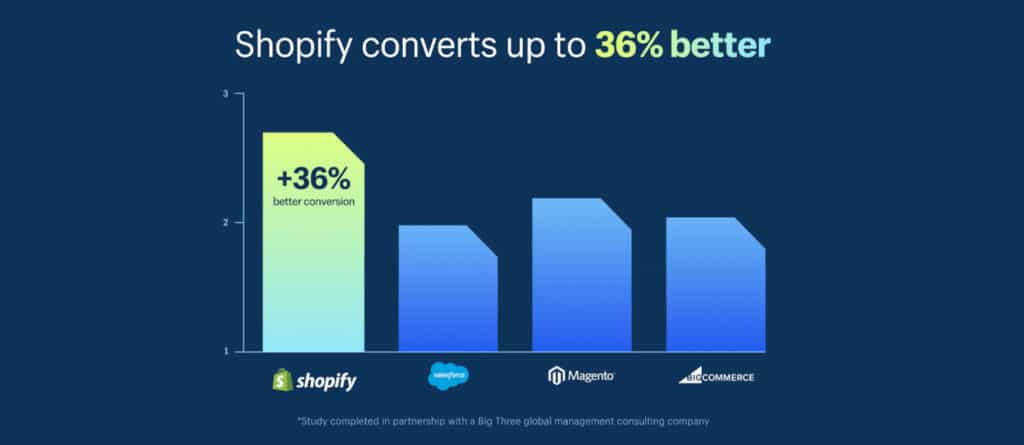
Driving traffic to your ecommerce store is only half the battle. If those hard-earned visitors abandon their carts at the final hurdle, your marketing budget is essentially wasted. This is why the bold claim that Shopify Checkout converts 36% better has captured the attention of enterprise retailers and ambitious startups alike.
As the digital landscape becomes increasingly competitive, securing the best ecommerce checkout experience is no longer a luxury; it is a baseline requirement for profitability. However, smart merchants know that marketing statistics require context. What exactly drives this massive lift in performance?
In this comprehensive guide, we will unpack the data behind Shopify’s conversion claims, explore the underlying technology driving these numbers, and provide actionable strategies to optimize your checkout flow for maximum revenue.
What Does ‘Shopify Checkout Converts 36% Better’ Actually Mean?
The claim that Shopify checkout converts 36% better means that, at the highest end of performance, Shopify’s checkout process successfully turns 36% more browsers into buyers compared to competing platforms. However, this is an “up to” figure; the independent study revealed that the average conversion lift across all merchants is approximately 15%.
When comparing platforms, it is vital to understand the distinction between this top-end ceiling and the median performance. The 36% lift represents a best-case scenario, typically achieved by brands leveraging Shopify’s full suite of accelerated payment options and mobile-first design principles.
Furthermore, this statistic specifically measures checkout completion efficiency, not overall store conversion. It isolates the exact moment a customer enters the checkout flow to the moment they finalize their payment.
Where the 36% Claim Comes From
To validate their position in the market, Shopify commissioned an independent analysis in April 2023. This study was conducted by a Big Three global management consulting firm to ensure objective, data-driven results.
The researchers analyzed proprietary data across all major global ecommerce platforms, utilizing like-for-like samples to ensure an accurate comparison. Crucially, the study did not just look at Shopify in a vacuum. It compared Shopify’s checkout completion rates directly against custom builds and prominent enterprise alternatives.
The resulting data proved that Shopify’s checkout architecture inherently reduces friction, leading to the widely cited 15% average lift and the 36% maximum advantage.
Why Shopify Checkout Performs Better Than Many Alternatives
Shopify does not achieve these numbers by accident. The platform’s checkout dominance is engineered around a specific set of technological and psychological advantages.
According to the study, Shopify cites four core drivers for their higher checkout conversion rates:
- Identity Network: Recognizing returning buyers across millions of stores to eliminate redundant data entry.
- Scale: Processing massive transaction volumes to optimize infrastructure resilience and gather behavioral data.
- Consumer Trust: Providing a recognizable, secure checkout interface that alleviates buyer anxiety.
- Speed of Innovation: Deploying hundreds of engineers solely dedicated to checkout performance and extensibility.
Shop Pay and the power of accelerated checkout
The crown jewel of Shopify’s conversion strategy is undeniably Shop Pay. This accelerated checkout wallet fundamentally alters the buying experience.
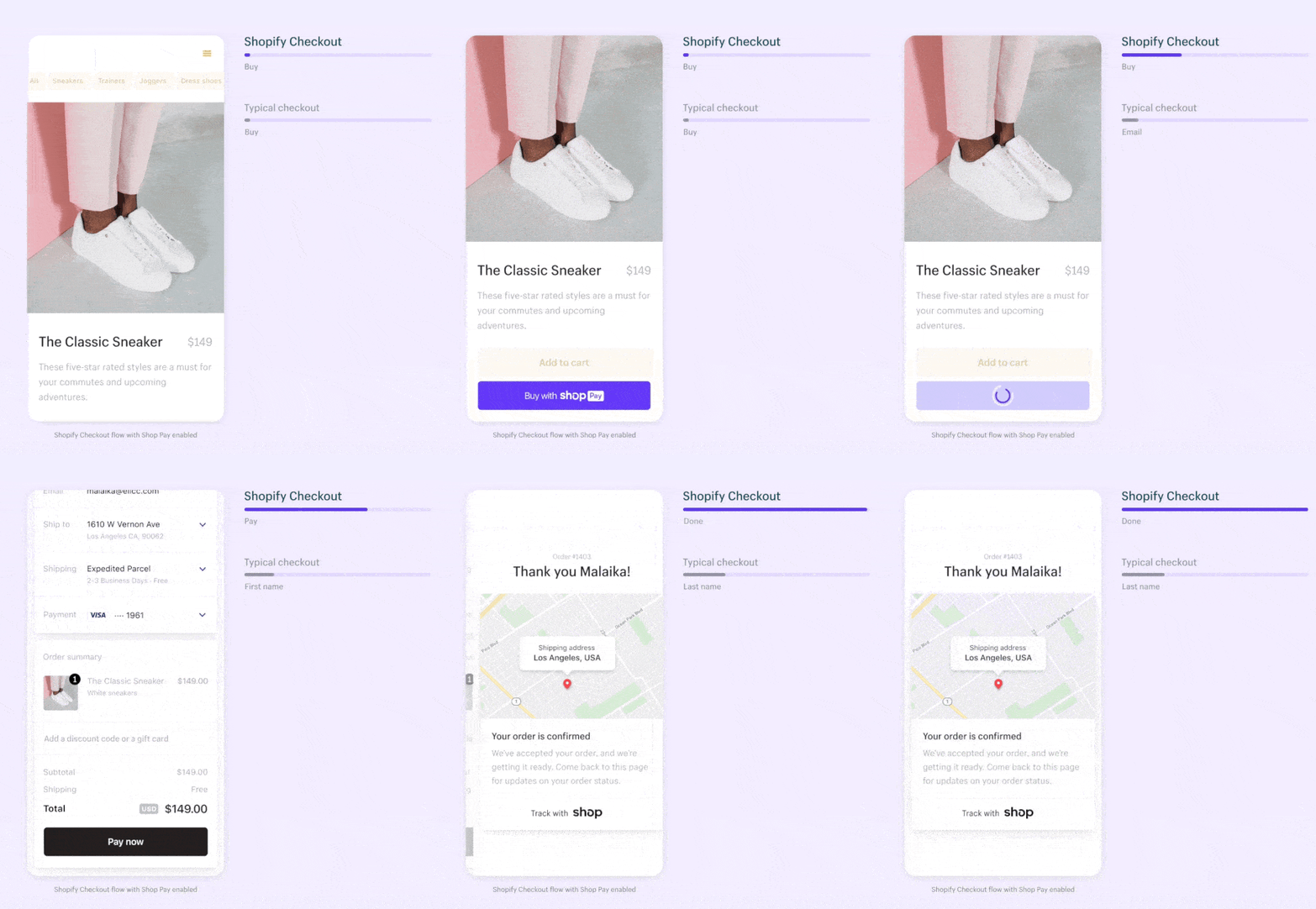
Shop Pay stores customer identities securely. When a returning user visits any Shopify store, the network instantly recognizes them, pre-filling their shipping and payment details. As a result, Shop Pay enables a checkout process that is four times faster than a standard guest checkout.
The data here is staggering. Shop Pay can lift conversion by as much as 50% compared to traditional guest checkouts. Even more impressively, the mere presence of the Shop Pay button can increase lower-funnel conversion by 5%, even before the shopper actively clicks it.
Identity network, scale, trust, and innovation
Shopify’s massive scale acts as a continuous feedback loop. Because the platform processed over half a trillion dollars in GMV in 2022 alone, it has an unparalleled understanding of how online shoppers behave.
This scale breeds consumer trust. When shoppers see the familiar, clean Shopify checkout interface, their anxiety regarding payment security drops. Familiarity breeds completion.
Furthermore, through Checkout Extensibility, Shopify balances this universal familiarity with in-depth customization. Merchants can tailor the checkout experience with bespoke apps, loyalty integrations, and custom fields without sacrificing the underlying stability that makes the checkout so fast.
Why Checkout Conversion Matters More Than Most Merchants Realize
Many retailers obsess over their overall store conversion rate, but this metric paints an incomplete picture. Overall conversion measures total traffic against total orders, blending high-intent buyers with casual window shoppers.
To truly master your metrics, you must understand your funnel stages. If you need help structuring this analysis, a comprehensive Customer Value Optimization guide can be invaluable.
Here is a breakdown of the standard ecommerce funnel:
- Sessions: Total visitors landing on your site.
- Add to Cart: Visitors who express tangible interest in a product.
- Reached Checkout: High-intent users ready to initiate payment.
- Completed Purchase: The final, successfully processed order.
Your shopify checkout conversion rate isolates the final two steps. If your store has a healthy “Add to Cart” rate but a low checkout completion rate, your site design is not the problem—your checkout friction is.
How Shopify Compares With Other Ecommerce Platforms
When evaluating a shopify checkout vs competitors, the conversation must focus on conversion efficiency rather than raw feature lists. Generic, multi-step checkouts on legacy platforms often introduce unnecessary latency.
Below is a compact comparison of how Shopify stacks up against less optimized alternatives:
| Feature | Shopify Checkout | Generic Platform Checkouts |
|---|---|---|
| Accelerated Wallets | Native integration (Shop Pay, Apple Pay) | Often requires third-party plugins |
| Identity Recognition | 100M+ pre-opted Shop Pay users | Limited to store-specific accounts |
| Architecture | Highly optimized, one-page options | Often segmented into 3-4 slow pages |
| Customization | Upgrade-safe Checkout Extensibility | Code-heavy, prone to breaking on updates |
For businesses looking to upgrade their infrastructure, exploring a seamless Shopify store migration is often the fastest path to reclaiming lost revenue.
How to Improve Your Shopify Checkout Conversion Rate
Even with the world’s best checkout architecture, merchant-level decisions can still introduce friction. Optimizing your specific setup is critical.
Reduce friction in forms, shipping, and payment
Friction is the enemy of conversion. Research indicates that 48% of customers abandon their carts due to unexpected extra costs surfacing late in the process.
To combat this, provide transparent pricing on the product page. Do not hide shipping costs until the final step.
Additionally, you must avoid forced account creation. Always offer a prominent guest checkout option. Keep your form fields to an absolute minimum—Baymard Institute research suggests the best checkouts use roughly 6 to 8 fields. Finally, display recognizable trust signals and security badges near your payment fields to reassure hesitant buyers.
Optimize for mobile and one-page checkout
Mobile devices now account for the majority of e-commerce traffic, yet they traditionally suffer from the highest abandonment rates. Your mobile checkout must be flawless.
This is where a Shopify one-page checkout conversion strategy shines. By condensing information, shipping, and payment into a single, scrollable interface, you eliminate the latency of loading multiple pages on cellular networks.
To see exactly where mobile users are dropping off, utilizing a website heatmapping guide can provide actionable visual data on user behavior.
What Is a Good Shopify Checkout Conversion Rate?
Benchmarking your performance requires context. A “good” rate depends heavily on your industry, traffic source, and average order value (AOV).
Industry data shows that the average Add-to-Cart (ATC) rate is about 7.52%. Of those who reach checkout, a healthy completion rate typically hovers around 45% to 55%.
However, categories matter. Consumable health and beauty products will naturally see higher conversion rates than luxury furniture due to price point and consideration time. If your metrics are lagging your specific industry average, it may be time to invest in professional Shopify CRO services to diagnose the leaks in your funnel.
Frequently Asked Questions
What is a good Shopify checkout conversion rate?
A healthy Shopify checkout conversion rate typically falls between 45% and 55%. This means roughly half of the users who initiate the checkout process successfully complete their purchase. However, overall store conversion rates usually average between 1.4% and 2%, depending heavily on your industry and traffic sources.
Is a 25% conversion rate good?
If you are measuring overall store traffic (sessions to purchases), a 25% conversion rate is extraordinarily high and highly unusual. However, if you are measuring checkout completion (users who started checkout vs. completed), 25% is critically low and indicates severe friction, such as hidden shipping costs or broken payment gateways.
How to get a better conversion rate on Shopify?
To improve your conversion rate, focus on reducing friction. Enable guest checkout, offer accelerated payment options like Shop Pay and Apple Pay, and condense your form fields. Additionally, ensure your pricing and shipping costs are transparent before the user enters the checkout flow.
Why is my conversion rate so low on Shopify?
Low conversion rates are typically caused by poor mobile optimization, slow page load speeds, forced account creation, or unexpected shipping fees added at the end of the checkout process. Irrelevant or low-intent traffic from poorly targeted ad campaigns can also artificially deflate your metrics.
Is a 2.5% conversion rate good?
Yes, an overall store conversion rate of 2.5% is generally considered good. It sits comfortably above the global e-commerce average of 1.4% to 1.8%. Stores achieving this rate usually have a strong product-market fit and a well-optimized user experience.
Is a 3% conversion rate good?
A 3% overall conversion rate is excellent. Achieving this places your Shopify store in the top 20% of performers on the platform. It indicates highly qualified traffic, compelling product pages, and a frictionless checkout experience.
Is Shopify checkout the best?
Data suggests that it is. Independent analysis by a Big Three consulting firm found that Shopify’s checkout converts up to 36% better than competing platforms, driven by its massive identity network, fast load times, and one-click Shop Pay integration.
Who is Shopify’s biggest competitor?
Shopify’s biggest competitors vary by market segment. For mid-market and enterprise brands, BigCommerce and Salesforce Commerce Cloud are primary rivals. For smaller or content-heavy businesses, WooCommerce (built on WordPress) is the most prominent competitor.
What are the most common Shopify mistakes to avoid?
Common mistakes include forcing users to create an account to buy, hiding shipping costs until the final checkout step, using cluttered navigation, ignoring mobile responsiveness, and failing to offer diverse, localized payment options.
Conclusion
The data is clear: the claim that Shopify Checkout converts 36% better is not just marketing jargon; rigorous independent analysis backs it. By leveraging a massive identity network, unparalleled scale, and the frictionless power of Shop Pay, Shopify provides a distinct competitive advantage.
However, technology alone cannot overcome poor merchant practices. To truly capture that conversion lift, you must actively optimize your store. Embrace one-page checkout, eliminate hidden fees, and respect your customer’s time by minimizing form fields.
If your store is currently struggling with high cart abandonment and you are ready to upgrade your infrastructure, it is time to take action. Reach out to hire shopify agency experts who can audit your funnel, implement best practices, and turn your checkout into a reliable revenue engine.