Jay Abraham, one of the top five executive coaches, according to Forbes, says that there are only three ways to grow a business. You can:
- Increase your customer count
- Increase the average amount that each of your customers spends
- Increase the transaction count per customer
Many businesses end up focusing on one strategy over another. For example, during the fidget spinner fad of 2017, businesses that sold the addictive gadgets knew that this was a cash-in, cash-out market — they were looking to get a huge volume of customers fast, knowing full well that these customers would likely never come back for a second purchase. So, they followed strategy number one.
Other businesses sell high-ticket items. They understand that they may not get a large number of customers, but they only need three customers buying a $3,000 product to make the same amount of revenue as 900 customers buying a $10 product. That’s strategy number two. This could also come in the form of a specialty business, like a rare book shop, slowly increasing its prices.
Finally, you could have a business that gets a solid customer base, keeps prices steady, but focuses on getting repeat customers. Think of a rural restaurant with a small, fixed customer base that has the same regulars come in for multiple meals each week.
But what if you could combine all three of these strategies? You continue to grow your customer count, you work to increase the average transaction amount, and you also build a base of repeat customers.
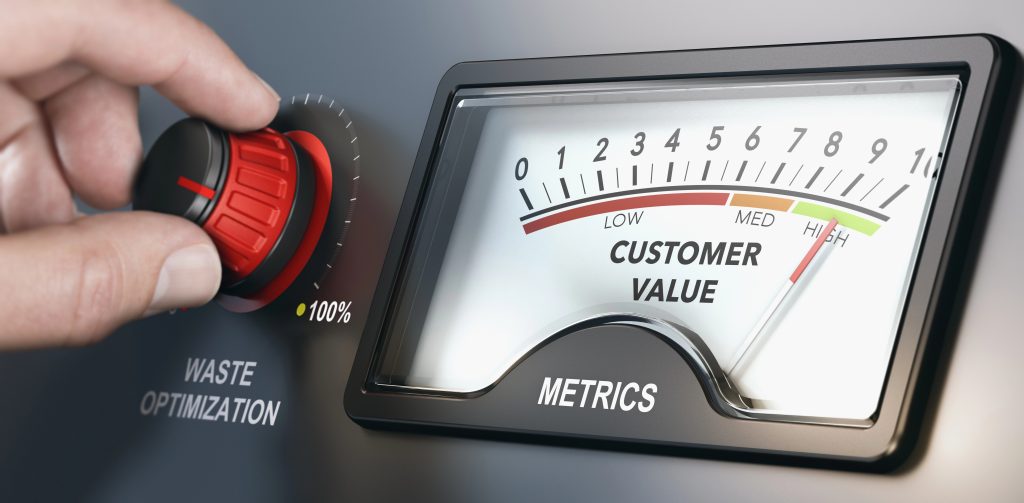
That’s the basis for Customer Value Optimization (CVO). In this beginner’s guide, we’ll give you an overview of the basics of the strategy so that you can have a solid foundation to work off of.
What Is Customer Value Optimization (CVO)?
Theoretically, CVO is simply the act of squeezing the most value out of every customer that comes your way. Another way to put it is identifying the ideal customer and then figuring out how to get the optimal amount of value from them.
In other words, it’s a way to optimize your customer lifetime value (CLV).
Sometimes, CVO also refers to a specific type of sales funnel, which we’ll cover in a later section.
Let’s take a look at an example of what this means in.
Imagine you run a specialty cupcake shop, and you charge $1.50 per cupcake. You’ve had the same prices and the same number of customers for years, and consequently, your business has remained stagnant, but profitable.
Let’s say you decide you want to make an effort to grow it, so you start running ads on a local radio station. This brings in an average of thirty new customers per week.
Now, what if you discovered that your customers are actually willing to pay up to $4 per muffin? That would have been an even easier place to start.
Plus, what if you ran a survey and found that if you offered extra toppings for $0.50, 75% of your customers would bite?
Now, imagine that you start a rewards program and find that this brings your customers in twice as often.
With these changes, you’ve gained completely new customers, you’ve increased the average transaction to $4.38 from $1.50, and you’ve also increased the number of transactions per customer.
This is customer value optimization in a nutshell: attacking the business growth challenge from every angle.
How Do You Implement Customer Value Optimization?
Every business is different, so you’ll need to use some creativity to find what works best for your unique situation. However, there are some starting points that you can use to kick things off.
To start, you need to identify who your ideal customer is. If you’ve been in business for a while, this should be fairly easy: just look through your records to find out who your most valuable customers actually are, and build your profile around them.
Next, take a look at what makes them so valuable to you — is it how much they spend, how often, or a combination of factors? Identify if there’s a way to build on these strengths, weaknesses, or both.
For example, if you run a SaaS business, you’re not going to be able to grow your customer value by increasing the number of transactions — that’s going to be pretty stable at one transaction per month, in most cases. However, you can work on upselling them with add-ons and improved functionality for a higher price.
Similarly, if you happen to be a fidget spinner retailer, the reality is that your customer lifetime value is likely going to stay pretty steady at $10 per customer no matter what you do — you’re not going to be able to build a repeat customer base. In that case, the best way to grow is to get more customers, and trying to leverage the ones you already have will likely be a waste of time, money, and effort.
Suffice to say that to really optimize your CLV, you first need to understand how your business operates and what your customers want from it.
The Customer Value Optimization Sales Funnel
In addition to this more abstract sense, CVO can also refer to a very specific type of sales funnel. It looks something like this:

If you’re not sure how to get started with CVO, this can be a good jumping off point. The strategy works like this:
1. Find the Product/Market Fit
To start, identify who your customers are. What are their pain points? What are they looking for in a product? And of course: what does your business do to alleviate these issues?
You can start brainstorming these ideas using a before-and-after chart. On one side, list out descriptors for your customer before they’ve purchased your product, and on the other, describe who they are after your product has improved their life.
The before-and-after comparison can be useful when it comes to the second half of this: determining how much value your product brings to them. Figuring this part out is essential to pricing your product.
2. Choose a Traffic Source
Now that you know who your ideal customer is, it’s time to figure out how you’re going to reach them. There are tons of different ways to do this, ranging from billboards to search engine marketing to PPC ads and beyond.
There is no right or wrong answer here — you’ll just have to find the channel that fits your customer best based on their profile.
3. Offer a Lead Magnet
Once your customer has visited your site or entered your store, your next goal is to capture their information so you can contact them again. To do so, you’ll need to offer them something of (typically informational) value in exchange for an email, phone number, etc.
A common example is a free e-book in exchange for an email.
4. Make a Tripwire Offer
The point of your tripwire offer is to warm your leads up. Instead of hitting them with your full $300 offer right away, try to see if they’ll bite on a cheaper item, like a $15 starter course. If they like that, they’re more likely to trust you with more of their money.
5. Offer Your Core Product
Now that your customer is warmed up, and you’ve gained their trust, it’s time to make an offer for your full-featured product. At this point, they’re much more likely to go for it than they would be if you had made a cold offer straight away.
6. Maximize Transaction Value
Once your customer has added your product to their cart and is making their way to the checkout screen, you can offer them additional products to increase their transaction value. This is pretty common fare for ecommerce these days — think of the “People also bought” panel on Amazon as an example.
Not everyone will purchase add-ons, but you’ll lose out on a lot of potential revenue if you don’t make an offer.
7. Turn Them Into Repeat Customers
A successful sale should be viewed as the beginning of a long customer relationship, not the end of the buyer’s journey.
Now that you have a full-fledged customer, you’ll need to create a return path for them. Often, this will take the form of blogging, retargeting, email marketing, and social media marketing.
However, you can also consider implementing rewards and loyalty programs to build up a solid customer base.
Key Takeaways: Customer Value Optimization
Too many businesses overlook the growth opportunities that their existing customers provide them in favor of the never-ending quest to gain more and more new customers.
While getting new business is important, brands need to take a holistic view of their business and devise strategies that leverage existing brand loyalty and generate new leads at the same time.
If you’re only focusing on one growth mechanism, you’re probably leaving money on the table.