Test. Measure. Lift.
Shopify Conversion Rate Optimization for Ecommerce Brands
We’re a Shopify Partner agency running structured conversion rate optimization programs for ecommerce brands ready to compound revenue from the traffic they already have. Our CRO work covers the full funnel: hero and landing page hooks, product page conversion mechanics, cart drawer UX, checkout flow optimization, and post-purchase upsell setup. Every experiment is grounded in real customer behavior data (heatmaps, session recordings, funnel analytics), tested against measurable revenue outcomes, and reported back to you with conversion lift and revenue attribution. Read our Customer Value Optimization guide for the strategic framework that informs every CRO engagement.
Our conversion optimization program helps you:
✓ Lift conversion rate from existing traffic without raising ad spend
✓ Increase Average Order Value through tested upsell and bundling strategies
✓ Reduce cart abandonment through checkout flow improvements
✓ Build a long-term testing discipline your team can keep running

You’re Not Getting The Sales You Want.
If you’ve invested in marketing but the sales numbers aren’t matching the traffic, you’re not alone. Most Shopify stores have at least one critical conversion blocker quietly costing them revenue: a slow product page, a confusing checkout flow, a missing trust signal at the cart, or a hero section that doesn’t actually communicate the offer. Identifying which blockers matter most for your specific store, and which fixes will actually lift revenue, is the work. We approach Shopify CRO as a structured testing discipline, not a guess-and-hope tactic. Every test is grounded in user research, designed against a measurable hypothesis, and reported back with conversion lift and revenue attribution so you know what worked and why.
A typical Shopify CRO engagement covers four interconnected work streams that compound over time:

1. Technical CRO Audit
A baseline audit of your store’s current conversion mechanics: page speed and Core Web Vitals (page speed alone can lift conversion rate by 5 to 15 percent), checkout flow friction, product page elements, cart drawer UX, and the technical setup of your tracking and analytics. The audit gives us the starting point and identifies the quick wins to ship in the first 30 days.

2. User Research and Behavioral Analysis
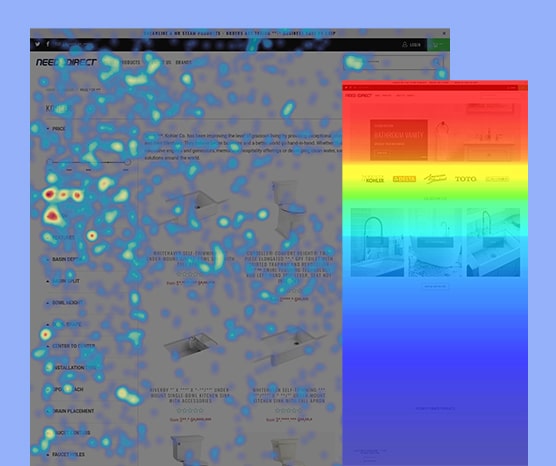
We layer in user research through heatmaps (Hotjar, Microsoft Clarity, FullStory), session recordings, funnel analytics, and customer surveys. The goal is to find the gap between what customers say they want, what they actually do on your site, and what your data shows. That gap is where the testable hypotheses live.

3. A/B Testing and Experimentation
CRO is a discipline, not a project. After the initial audit and first round of tests, we move into ongoing testing cadence with a fresh hypothesis and experiment every cycle. Stores that commit to long-term CRO compound revenue gains over time, often surpassing the value of new traffic acquisition.
Our Approach to Improving Your Shopify CRO
1. Defining Your Goals
We start by aligning on what success looks like for your business. Is the priority lifting overall conversion rate, increasing average order value, growing customer LTV, or reducing cart abandonment? Different goals require different experiments. Once we know the target metric, every test gets designed against it.
2. Understanding Your Audience
We build a research foundation through analytics review, heatmap and session recording analysis, funnel breakdown, and customer surveys where appropriate. The goal is to surface the gap between your visitors’ intent and the experience they’re actually getting on your store. That gap is where the testable opportunities live.
3. Develop Testing Hypotheses
Each problem area gets translated into a structured testing hypothesis: “If we [change X], we expect [metric Y to move by Z amount] because [user behavior insight that supports the change].” Hypotheses without data backing don’t make it into the test queue. This is the difference between disciplined CRO and guessing.
4. Create Prototypes and Test Designs
Prototypes range from simple copy changes on call-to-action buttons to fully redesigned product page or checkout flow variants. We design the test variant alongside the control, calculate the sample size needed for statistical significance, and set clear go/no-go criteria before any traffic gets routed.
5. Run the Experiment and Collect Data
Tests run through your store’s traffic for the required duration. We use Shopify-native testing tools and third-party platforms (Convert, VWO, Optimizely) depending on your tech stack. Tests reach statistical significance or the predefined sample size before we call a result. No optimizing on the fly, no early stopping on positive trends.
6. Implement the Winning Variant
Each problem area gets translated into a structured testing hypothesis: “If we [change X], we expect [metric Y to move by Z amount] because [user behavior insight that supports the change].” Hypotheses without data backing don’t make it into the test queue. This is the difference between disciplined CRO and guessing.
7. Rinse and Repeat
Prototypes range from simple copy changes on call-to-action buttons to fully redesigned product page or checkout flow variants. We design the test variant alongside the control, calculate the sample size needed for statistical significance, and set clear go/no-go criteria before any traffic gets routed.
Why Choose Soda Web Media for Shopify CRO?
Most CRO agencies are generalists who happen to take Shopify clients. We’re a Shopify Partner agency that builds, designs, and grows Shopify stores as our entire business, which means our CRO team knows exactly how Shopify’s checkout works, where Shopify’s reporting captures conversion events, how Shop Pay affects conversion rate, what Shopify-native features can replace third-party apps, and where the platform’s defaults leave revenue on the table. Generalist agencies learn this on your dime.
We also approach CRO as a revenue discipline, not a deliverable count. Every experiment ties back to a revenue number you can actually report. And because we also do Shopify design, development, and theme work in-house, we can ship the on-site changes our tests surface, no “we recommended it but your dev team didn’t implement it” dead ends. Read our Shopify Homepage Checklist for Conversion for the proven patterns we apply on every CRO engagement.
Our Previous Shopify Builds
-

PITBOX USA
A Shopify design and development project migrating PitBox USA from Squarespace, featuring custom theme design, branded Shopify emails, Judge.me review integration, and GitHub version control for a backyard barbecue brand.
View Project -
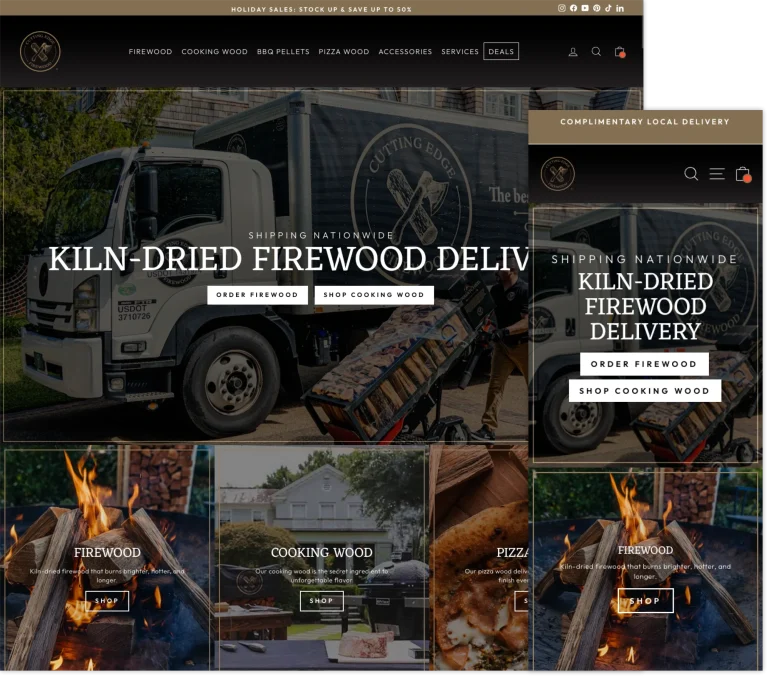
Cutting Edge Firewood
Lewis and Sheron Textiles is a four-generation American-owned textile company offering the world’s finest home fabrics in Atlanta, GA.
View Project

“Mihai and team did an exceptional job with our recent website build. Soda Web provides consistent communication throughout the entirety of the process. Be as hands-on or hands-off in the process, but rest assured the end product will meet your expectations. I would highly recommend a look at Soda Web for any website development or re-vamp needs.”
Jonathan Miller, Principal, White Head Industrial
Shopify CRO FAQ
Common questions from Shopify merchants considering a conversion rate optimization program. If you don’t see your question here, reach out and we’ll get you an answer.
What’s the difference between SEO and CRO?
SEO drives more traffic to your store. CRO converts more of that traffic into revenue. They work together: SEO and paid ads bring qualified visitors, CRO ensures the visitors actually buy. Stores that invest only in SEO and paid traffic without CRO are paying to send more customers into a store that’s leaking conversions, which is the most expensive way to grow. For dedicated SEO work, see our Shopify SEO services.
How long until I see results from CRO?
The first technical and UX fixes from the audit phase typically ship within 4 to 6 weeks of kickoff, and you’ll see measurable conversion lift on quick wins (page speed improvements, checkout friction removal, broken trust signals) within the first 30 to 60 days. A/B testing takes longer because each test needs enough traffic to reach statistical significance, typically 2 to 4 weeks per experiment. Compounding revenue gains from a structured CRO program become visible over 3 to 6 months, then continue compounding as the testing cadence builds.
Do I require a lot of traffic to do CRO?
For A/B testing to work, yes, you need enough traffic to reach statistical significance in a reasonable time. As a rough guide, stores with under 5,000 monthly visitors typically benefit more from foundational CRO work (page speed, UX audits, qualitative research, checkout optimization) than from formal A/B testing. Stores at 10,000+ monthly visitors can run meaningful A/B tests. Stores at 50,000+ visitors can run multiple concurrent tests across the funnel. We scope the CRO approach to your traffic level during discovery.
What’s included in a CRO engagement?
Every engagement includes a technical CRO audit, user research (heatmaps, session recordings, funnel analytics, customer surveys), A/B test design and execution, implementation of winning variants, monthly performance reporting, and continuous testing cadence. We use Shopify-native testing tools and third-party platforms (Convert, VWO, Optimizely) depending on your stack. The work scales from a one-time audit + first-round tests to ongoing monthly experimentation, depending on your goals.
What tools do you use for Shopify CRO?
For user research: Hotjar, Microsoft Clarity, FullStory (heatmaps and session recordings), Google Analytics 4 (funnel analytics), customer survey tools (Typeform, Hotjar surveys). For A/B testing: Shopify-native testing capabilities, Convert, VWO, Optimizely, depending on the experiment scope and your existing tech stack. For implementation: direct theme code changes, Shopify Functions for checkout customization, Shopify apps where appropriate. We bring the tools or work within yours.
How much does a Shopify CRO engagement cost?
Cost depends on engagement scope (audit-only versus ongoing testing), traffic volume, and the complexity of your store’s setup. We send a fixed-fee proposal after a scoping call so you know exactly what you’re paying before any work begins. Reach out for a free scoping conversation and we will quote your specific CRO program.
Are you based in Atlanta, and do you work with clients outside the city?
Yes. Soda Web Media is headquartered in Atlanta, and our Shopify CRO clients are based across the United States. Strategy, research, test design, implementation, and reporting all happen remotely via video, screen-share, and shared dashboards.
Ready to Lift Your Shopify Conversion Rate?
Our Shopify CRO team will audit your store, identify the highest-impact testing opportunities for your specific traffic and revenue model, and share a fixed-fee proposal. Free discovery call, no commitment required.