
Building a high-converting home decor Shopify store comes down to four things: choosing a tight visual niche, picking a premium theme with image hotspots and AR, building product pages that answer every dimension and shipping question, and layering in BNPL financing plus social proof. Brands that nail those four — like Lulu and Georgia, Burrow, Parachute, Revival Rugs, and Goodee — convert at multiples of generic decor stores.
A home decor Shopify store is an online storefront built on the Shopify platform that sells interior styling products such as furniture, lighting, rugs, wall art, and decorative accessories. This guide is specifically designed for ecommerce founders, marketers, and designers who want to launch, optimize, or scale a profitable home decor brand without relying on guesswork.
Selling home decor online presents unique challenges. Unlike buying a t-shirt, purchasing a velvet sofa or a vintage rug requires a high degree of buyer confidence. Shoppers need help visualizing items in their personal spaces, comparing materials, and understanding complex shipping logistics.
To capture this audience, the most successful home decor Shopify stores share a few core traits:
Immersive Visual Merchandising: Utilizing 3D models, augmented reality (AR), and high-resolution room scenes.
Frictionless UX and Navigation: Allowing users to shop by room, style, or specific material.
Robust Trust Signals: Clearly displaying shipping costs, return policies, and verified customer reviews.
Operational Excellence: Seamlessly handling the fulfillment of bulky, fragile, or high-ticket items.
If you are ready to carve out your share of this lucrative market, read on. We will explore what makes these storefronts succeed, dissect top-performing examples, and provide an actionable roadmap for your brand.
Key Takeaways
- Yes, home decor sells on Shopify — profit margins typically 20–50%, with a global market exceeding $700 billion (Grand View Research) and over 16,000 active home decor Shopify stores in the US alone.
- 5 standout examples in this guide: Lulu and Georgia, Burrow, Parachute, Revival Rugs, Goodee. For 8 more, see our 13 best home decor Shopify stores roundup.
- 4-step launch: choose your niche → pick a theme & apps → add must-have features → launch marketing.
- Mobile-first is non-negotiable: over 60% of ecommerce traffic is mobile (eMarketer). Site speed and finger-friendly UX are conversion gates.
- Themes that work: Horizon (free), Impulse, Prestige, Broadcast — see our best Shopify theme for home decor guide for the full breakdown.
- Furniture-heavy catalog? Read our Shopify for furniture stores guide for white-glove logistics, freight profiles, and showroom integration.
- The full playbook: for the operator-level walkthrough across niche, theme, PDPs, conversion, freight, B2B, and marketing, see our Selling Home Decor & Furniture on Shopify: An Operator’s Playbook.
Shopify vs. Etsy for Home Decor Sellers
| Feature | Shopify | Etsy |
|---|---|---|
| Brand Control | Complete control over design, UX, and customer data. | Limited customization; you rent space on their platform. |
| Customer Base | You must drive your own traffic via marketing and SEO. | Built-in audience actively searching for handmade/vintage decor. |
| Fees | Flat monthly subscription + standard payment processing. | Listing fees + high transaction/commission fees per sale. |
| Scalability | Ideal for scaling to an enterprise or B2B level. | Best for hobbyists or testing product-market fit. |
Many new decor brands debate whether to launch on a marketplace like Etsy or build a standalone Shopify store. Here is a quick comparison:
Ultimately, serious home decor brands choose Shopify to own their customer relationships and scale without restrictive marketplace fees.
What Makes a Great Home Decor Shopify Store?
Creating a beautiful website is only half the battle. A truly great home decor Shopify store functions as a digital showroom, guiding users effortlessly from initial inspiration to final checkout. Because home decor is highly visual and style-led, your user experience (UX) must bridge the gap between digital browsing and physical reality.
Core UX Elements: Navigation, Filters, and Search
When a shopper lands on your site, they usually have a specific problem to solve. They might be looking for a mid-century modern accent chair, or they might just want “something for the living room.” Consequently, your navigation must cater to both intent-driven buyers and casual browsers.
Top-performing stores utilize mega menus that categorize products logically. Instead of a generic “Furniture” tab, they break navigation down into room-based categories (e.g., Bedroom, Home Office) and style-based collections (e.g., Coastal, Industrial). Robust filtering is also non-negotiable. Customers must filter large catalogs by dimensions, color, material, price, and availability.
High-Converting Product Pages
In the home decor space, the product detail page (PDP) makes or breaks the sale. Shoppers cannot touch the fabric or sit on the mattress, so your PDP must answer every conceivable question.
A high-converting product page includes:
Lifestyle Photography: Show the product in a fully styled room to provide a sense of scale and aesthetic context.
Granular Specifications: Clearly list exact dimensions, weight, material composition, and care instructions.
Transparency: Prominently display shipping timelines, freight costs, and return policies near the “Add to Cart” button to reduce last-minute cart abandonment.
If you are struggling with low conversion rates on your PDPs, investing in professional Shopify CRO services can help identify friction points and streamline the buying journey.
Visual Merchandising That Drives Conversion
Innovative visual merchandising is what separates amateur shops from enterprise-level brands. Features like “Shop the Look” allow customers to buy an entire curated room in just a few clicks.
Additionally, offering fabric swatches directly on the product page significantly boosts buyer confidence. For higher-ticket items, implementing Augmented Reality (AR) or 3D previews empowers shoppers to virtually place a piece of furniture in their own living room using their smartphone camera.
Best Home Decor Shopify Store Examples to Inspire Your Brand
To understand what excellence looks like in practice, let’s examine a curated roundup of standout brands. If you want to explore more home decor Shopify examples, these industry leaders set the gold standard.
1. Lulu and Georgia
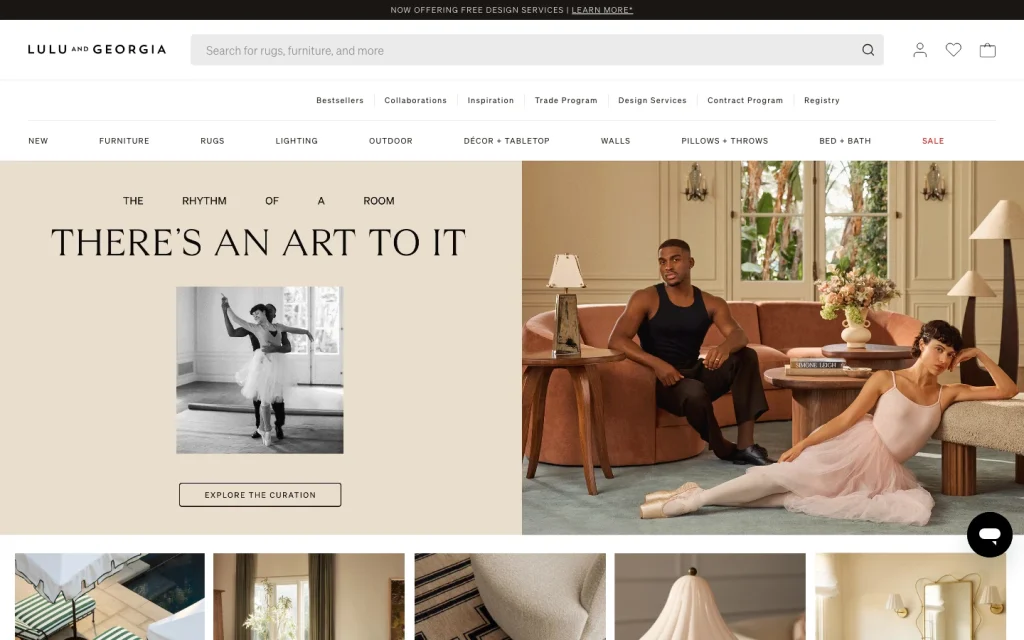
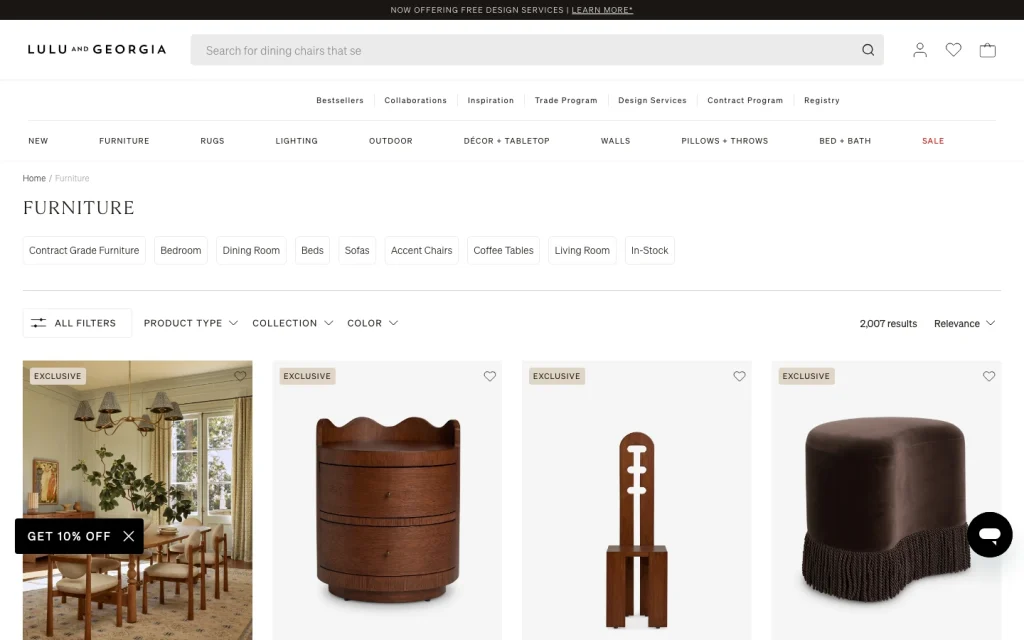
What they do well: Exceptional lifestyle photography that sells a cohesive aesthetic.
Key takeaway: Their category structure is highly intuitive, allowing users to shop by room or specific designer collections, which drastically reduces decision fatigue.
2. Burrow
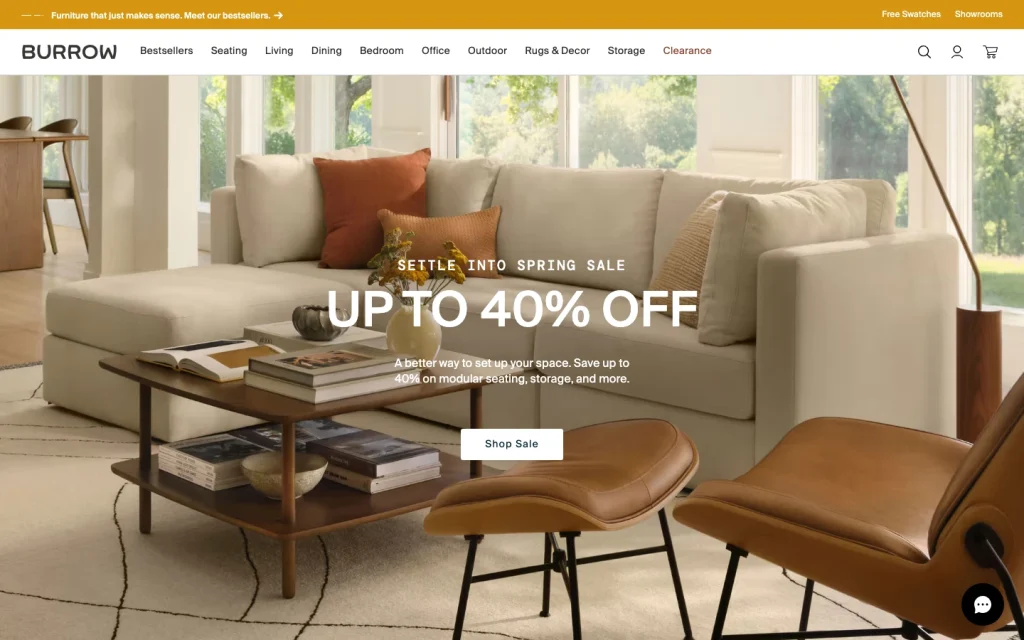

Burrow disrupted the furniture market with modular, easy-to-move sofas.
What they do well: Clear, benefit-driven copywriting that immediately highlights their unique selling proposition (tool-free assembly and modularity).
Key takeaway: They use interactive videos and GIFs on their product pages to demonstrate exactly how the furniture fits together.
3. Parachute
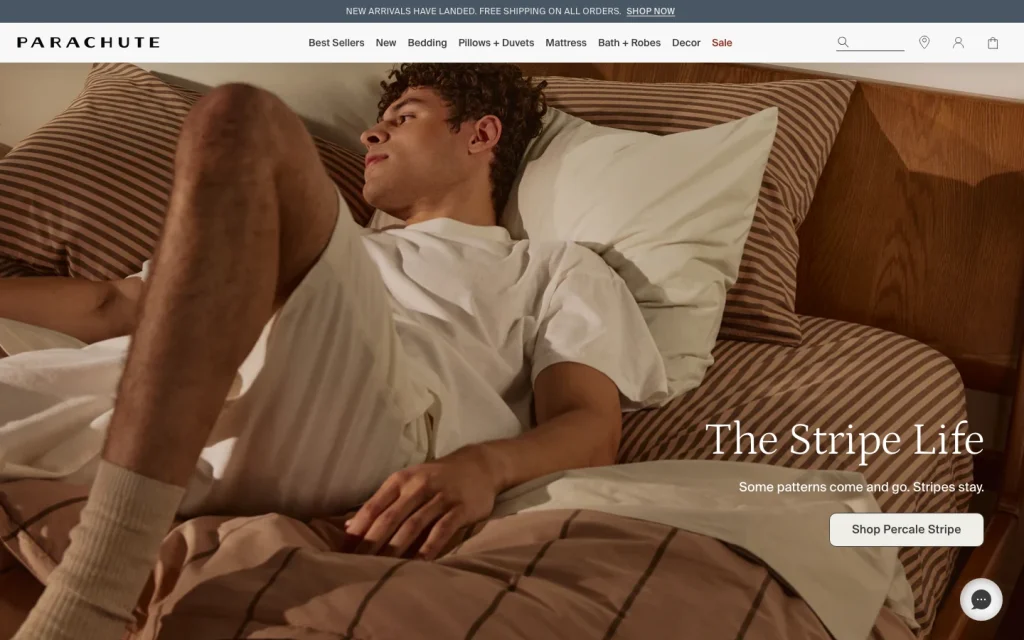
Parachute specializes in premium bedding and bath essentials, Parachute leans heavily into a minimalist, calming aesthetic.
What they do well: They offer bundled sets (e.g., a complete bedding bundle) that increase average order value (AOV) while simplifying the shopping process.
Key takeaway: Their generous return policy and transparent material sourcing build immense brand trust.
4. Revival Rugs
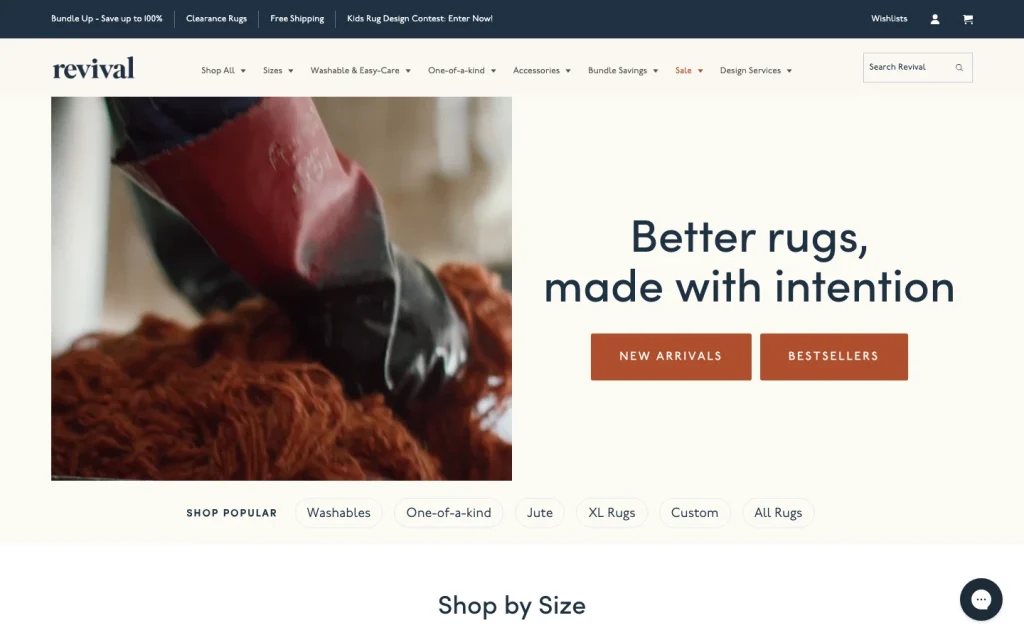

Revival Rugs sells both vintage and contemporary rugs, Revival Rugs tackles a notoriously difficult product category with grace.
What they do well: They organize their navigation exactly how people shop for rugs: by size, color, and style.
Key takeaway: They utilize AR technology so customers can see exactly how a 9×12 rug will look in their space before committing to a purchase.
5. Goodee

Goodee is a curated marketplace focusing on sustainable, ethically made home goods.
What they do well: Storytelling. Every product page features the artisan or brand behind the item, connecting the buyer to the creator.
Key takeaway: They seamlessly integrate their brand values (sustainability, fair trade) into their merchandising, appealing directly to conscious consumers.
All 5 Stores at a Glance
| # | Brand | Niche | Standout UX | Conversion lever |
|---|---|---|---|---|
| 1 | Lulu and Georgia | Modern + vintage decor | Editorial lifestyle photography | Designer-collection navigation |
| 2 | Burrow | Modular furniture | Interactive video + GIF demos on PDPs | Tool-free assembly USP |
| 3 | Parachute | Premium bedding & bath | Minimalist editorial calm | Bundled sets to lift AOV |
| 4 | Revival Rugs | Vintage + contemporary rugs | Faceted filter by size, color, weave | AR rug-in-room visualization |
| 5 | Goodee | Curated sustainable goods | Artisan stories on every PDP | Brand-values merchandising |
What These Stores Get Right
Across the board, these brands prioritize clarity, visual immersion, and customer confidence. They do not hide shipping costs, they do not skimp on photography, and they actively use technology (like AR and bundling apps) to replicate the in-store showroom experience.
Can You Sell Home Decor on Shopify Profitably?
Yes, selling home decor on Shopify can be highly profitable. Profit margins in this niche typically range from 20% to 50%, depending on your sourcing model. Because home decor items often command higher price points, you can achieve significant revenue with fewer overall sales compared to low-ticket retail categories.
The market opportunity is immense. According to industry data from Grand View Research, the global home decor market generated roughly $697.91 billion in revenue in 2023. As of early 2026, there are also over 16,437 active Shopify stores selling home decor products, with the United States accounting for 44% of that market.
While the competition is fierce, the demand remains robust. The rise of remote and hybrid work models has driven consumers to invest heavily in their living and home-office spaces. Additionally, Shopify is an ideal platform for B2B wholesale expansion. With 73% of B2B buyers preferring digital channels to evaluate suppliers, a home decor Shopify store allows you to seamlessly run both direct-to-consumer (DTC) and wholesale operations from a single backend.
How to Start a Home Decor Shopify Store
Launching a successful storefront requires strategic planning. You must align your product sourcing, brand identity, and technical setup before you ever drive a single visitor to your site.
Choose a Niche, Product Mix, and Brand Style
Do not try to be the next Wayfair or IKEA right out of the gate. The most successful new brands are highly specialized. Determine whether you want to sell minimalist Scandinavian lighting, maximalist bohemian textiles, or sustainable outdoor furniture.
Once you have identified your niche, establish a distinct brand style. Your color palette, typography, and copywriting tone should all reflect the lifestyle you are selling. Then decide on your business model. Will you manufacture your own custom pieces, curate wholesale items from artisans, or utilize a dropshipping model for low-risk testing?
Pick the Right Theme, Apps, and Store Structure
Your Shopify theme dictates layout and functionality. Shopify’s free Horizon theme is popular among decor stores for its speed and image-forward design. Premium themes, however, provide the advanced filtering and mega-menu features required for large furniture catalogs. For an in-depth comparison, read our best Shopify theme for home decor guide.
To enhance your store’s functionality, integrate specialized apps:
Reviews: Apps like Loox or Judge.me to collect photo reviews.
Visuals: Image zoom and 3D/AR preview applications.
Sales: Upsell and bundle apps to increase AOV.
Personalization: Quizzes that help users find their specific decor style.
If the technical setup feels overwhelming, partnering with an agency for Shopify store setup services ensures your architecture is flawlessly optimized from day one.
Must-Have Features for a High-Converting Home Decor Store
To turn casual browsers into paying customers, your store needs a specific set of features tailored to the decor industry.
Mobile-First Performance: Over 60% of e-commerce traffic comes from mobile devices. Your site must feature fast load times, finger-friendly buttons, and a seamless mobile checkout experience.
Trust and Conversion Boosters: Display free shipping thresholds prominently in your announcement bar. Offer flexible financing options (like Shop Pay Installments or Klarna) to make high-ticket furniture more accessible.
Comprehensive FAQs: Address common concerns about assembly, delivery timelines, and return procedures directly on the product page.
Operational Integrations: Shipping a fragile ceramic vase is very different from freight-shipping a 300-pound dining table. Make sure your backend calculates real-time rates accurately and handles complex inventory planning.
For brands with physical showrooms, implementing a unified omnichannel retail strategy allows customers to buy online and pick up in-store (BOPIS), bridging the gap between digital and physical commerce.
Marketing Strategies to Grow a Home Decor Shopify Store
Driving qualified traffic to your store requires a multi-channel approach. Because home decor is aspirational, your marketing should focus heavily on visual storytelling and social proof.
Search Engine Optimization (SEO): Optimize your category pages and product descriptions for high-intent keywords (e.g., “mid-century modern walnut coffee table”). Create inspirational blog content targeting specific design trends to capture top-of-funnel traffic.
Email and SMS Marketing: Decor purchases often have long consideration cycles. Use automated email flows (like welcome series and abandoned cart reminders) to nurture leads over time.
Social Proof and Influencer Content: Partner with interior design influencers on platforms like Instagram and TikTok. Seeing your products styled in a real, beautiful home is the most effective way to build desire and trust.
Repeat-Purchase Tactics: Encourage customer retention by offering loyalty programs or VIP discounts on seasonal decor refreshes.
For brands looking to dominate search rankings specifically in the furniture space, seeking specialized Shopify for furniture stores guidance can provide a massive competitive advantage.
FAQ About Home Decor Shopify Stores
Can you sell home decor on Shopify?
Yes, Shopify is one of the best platforms for selling home decor. It offers robust inventory management, seamless integration with dropshipping suppliers, and visually stunning themes specifically designed to showcase furniture, art, and home accessories effectively.
Do I need an LLC to run a Shopify store?
You do not strictly need an LLC to open a Shopify store; you can start as a sole proprietor. However, forming an LLC is highly recommended as it protects your personal assets from business liabilities and provides tax flexibility as your decor brand grows.
Which market is best for home decor?
The United States is currently the largest and most lucrative market for home decor, accounting for a massive share of global revenue. However, eco-friendly and sustainable decor markets in Europe, particularly Germany and the UK, are also experiencing rapid, highly profitable growth.
What are the top 10 Shopify stores?
While rankings constantly shift, some top Shopify stores in the home decor space include Parachute, Brooklinen, Lulu and Georgia, Burrow, Ruggable, Goodee, Interior Define, Article, McGee & Co., and Jonathan Adler. These brands excel in UX, branding, and product quality.
What cannot be sold on Shopify?
Shopify prohibits the sale of illegal goods, counterfeit items, firearms, explosives, highly regulated pharmaceuticals, and adult content. Fortunately, standard home decor items—including furniture, textiles, and art—are perfectly safe and fully permitted on the platform.
How to start an online home decor business?
Start by identifying a specific niche (e.g., minimalist lighting). Next, source high-quality products from reliable suppliers or manufacturers. Build an optimized ecommerce website using Shopify, set up secure payment gateways, and launch a visual marketing strategy on platforms like Instagram and Pinterest.
Is home decor a profitable business?
Yes, the home decor business is highly profitable. Because consumers are willing to invest in their living spaces, profit margins typically range from 20% to 50%. Selling premium, high-ticket items allows you to generate substantial revenue with a lower volume of total sales.
What are the best Shopify themes for a home decor store?
The best Shopify themes for home decor prioritize large, high-resolution imagery and clean navigation. “Dawn” is an excellent free option, while premium themes like “Prestige,” “Impulse,” and “Canopy” offer the advanced filtering and editorial-style layouts required for expansive furniture catalogs.
What features should a home decor Shopify store include?
A successful home decor Shopify store should include high-resolution lifestyle imagery, AR/3D product previews, detailed dimension and material specs, customer reviews with photos, easy-to-use room-based navigation, and transparent shipping and return policies.
Conclusion
Building a successful home decor Shopify store is an incredibly rewarding venture that blends creative aesthetics with strategic ecommerce operations. By focusing on a highly specific niche, investing in immersive visual merchandising, and prioritizing a frictionless user experience, you can build a brand that stands out in a competitive market.
Remember, your online store is your digital showroom. Every pixel, product description, and shipping policy must be designed to build buyer confidence. If you are ready to elevate your brand, start applying these UX strategies, leverage the power of Shopify’s unified commerce tools, and watch your home decor business scale to new heights.