

The best home decor and furniture Shopify stores in 2026, including Parachute, Brooklinen, McGee & Co., Burrow, Lulu and Georgia, The Citizenry, Jonathan Adler, Ruggable, Leesa, HORNE, Shoppe Amber Interiors, Revival Rugs, and Fyrn, combine immersive lifestyle imagery, advanced filtering, AR product visualization, and freight-aware delivery promises to convert a high-consideration audience into repeat buyers.
In the highly competitive world of e-commerce, the home goods sector has evolved from static catalogs into an immersive, digital-first experience. Today’s consumers expect to visualize products in their living spaces, understand intricate material details, and enjoy a frictionless checkout process. Consequently, the best home decor Shopify stores are setting the gold standard for digital merchandising. They seamlessly blend aspirational brand storytelling with conversion-focused UX design, proving that high-ticket, high-consideration items can be sold effectively online.
Whether you are an established retailer looking to replatform or a new founder launching a direct-to-consumer brand, analyzing these industry leaders provides an invaluable blueprint. In this comprehensive guide, we will dissect the strategies, design patterns, and features that make these stores so successful.
Key Takeaways
- 13 standout stores spanning bedding (Parachute, Brooklinen, Leesa), furniture (Burrow, Fyrn), curated marketplaces (HORNE, The Citizenry), and design-led decor (McGee & Co., Lulu and Georgia, Shoppe Amber Interiors, Revival Rugs, Jonathan Adler, Ruggable).
- Three UX patterns appear in nearly all top performers: high-fidelity lifestyle photography, augmented reality (AR) and 3D product previews, and dimension-aware filtering by room or style.
- Conversion drivers: “Shop the Look” hotspots, sticky add-to-cart bars, BNPL financing (Shop Pay Installments / Klarna / Affirm), and material-swatch ordering for textiles.
- Furniture-specific operations: custom shipping profiles for freight, BOPIS, white-glove delivery scheduling, and B2B trade programs for interior designers.
- Common backbone: most run on premium themes (Prestige, Impulse, Broadcast) or custom Shopify Plus builds — see our best Shopify theme for home decor guide for theme selection.
- Building your own: read our practical build guide for high-converting home decor Shopify stores, or the Shopify for furniture stores guide for vertical-specific operational depth.
- The full playbook: for the operator-level walkthrough across niche, theme, PDPs, conversion, freight, B2B, and marketing, see our Selling Home Decor & Furniture on Shopify: An Operator’s Playbook.
What Makes the Best Home Decor Shopify Stores Stand Out?
The best home decor Shopify stores stand out by combining immersive visual branding with intuitive user experiences. They utilize high-quality lifestyle photography, augmented reality (AR) visualization tools, robust filtering systems, and transparent shipping policies to build buyer confidence and drive conversions in a high-consideration market.
To earn a spot among the elite, an online home decor brand must excel across several foundational criteria:
User Experience (UX) and Navigation: The ability to browse seamlessly by room, aesthetic style, material, or specific product category without encountering friction.
Immersive Merchandising: High-resolution lifestyle photography paired with detailed close-ups that communicate texture, scale, and quality.
Confidence-Building Features: The integration of 3D configurators, AR room visualizers, material swatch ordering, and authentic customer reviews.
Conversion Optimization: Strategic deployment of product bundles, financing options (Buy Now, Pay Later), sticky add-to-cart buttons, and streamlined checkouts.
Brand Storytelling: Editorial-style content, curated collections, and transparent sustainability practices that forge an emotional connection with the buyer.
Common Design and UX Patterns Across Top Stores
When examining the architecture of top-performing ecommerce sites, several distinct patterns emerge. Building a successful Shopify for furniture stores requires more than just an attractive theme; it demands a strategic ecosystem designed to eliminate purchase hesitation.
Store UX and Intuitive Navigation
Complex catalogs require sophisticated navigation. Leading brands utilize mega menus that categorize products visually. Room-based browsing (e.g., “Shop the Living Room”) lets customers shop contextually rather than search for isolated items. Advanced filtering systems are non-negotiable: users must sort by dimensions, materials, color palettes, and stock availability to reduce choice paralysis.
Product Presentation and Visual Clarity
In home decor, your product page is your digital showroom. Best-in-class stores mix aspirational lifestyle photography with clinical, well-lit close-ups. Customers need to see the weave of a linen sheet or the grain of a walnut dining table. PDPs must also state dimensions, care instructions, and material origins clearly.
Visualization and Confidence-Building Tools
Because customers cannot physically touch the products, stores must bridge the tactile gap. Native 3D models and Augmented Reality (AR) configurators let shoppers project a sofa or rug into their living room via their smartphone camera. For highly tactile items, physical material swatches (free or nominally priced) drastically reduce return rates. For a deeper dive on the build mechanics, see our guide to building a high-converting home decor Shopify store.
Conversion-Focused Features
Driving traffic is only half the battle; converting it requires finesse. Top stores use sticky add-to-cart bars that remain visible as users scroll long descriptions. They also leverage product bundling (e.g., “The Complete Bedding Set”) to lift AOV. Financing options like Shop Pay Installments or Klarna soften the sticker shock of high-ticket furniture. If your store struggles here, professional Shopify CRO services can identify and eliminate conversion bottlenecks.
Brand Storytelling and Inspirational Merchandising
Home decor is an emotional purchase. Customers aren’t just buying a chair; they are buying the vision of a curated home. “Shop-the-look” sections allow users to purchase entire styled rooms directly from a single photograph. Blogs and editorial content featuring interior design tips further position the brand as an authoritative voice in the space.
What the Best Shopify Furniture Stores Do Differently
Shipping a 300-pound sectional sofa is very different from shipping a t-shirt. Transparency on shipping costs, delivery timelines, and white-glove assembly must be established early in the customer journey. Clear, easily accessible return policies are equally vital for mitigating the perceived risk of buying large items online. Brands in this category should review our Shopify for furniture stores guide for white-glove logistics, freight profiles, and showroom integration patterns.
The B2B and Trade-Program Angle
Many successful home decor brands run a dual-channel model, serving both retail consumers and interior designers. A dedicated B2B trade program with tiered discounts, tax exemptions, and dedicated account managers creates a lucrative recurring revenue stream.
Mobile-First Performance
With mobile commerce accounting for the lion’s share of global web traffic (eMarketer’s mobile commerce data), fast-loading thumb-friendly design is a competitive advantage. Heavy visual assets like 3D models and high-res images must be aggressively compressed and lazy-loaded to keep the site responsive on cellular networks.
Sustainability and Ethical Craftsmanship
Modern consumers vote with their wallets. Highlighting sustainable materials, fair-trade certifications, and ethical sourcing practices acts as a powerful trust signal. Brands that transparently document their supply chain often command premium pricing and foster deeper customer loyalty.
Best Home Decor and Furniture Shopify Stores to Inspire Your Brand
To truly understand what works, we must look at the brands executing these strategies flawlessly. Below is a curated list of standout Shopify home decor store examples, highlighting their unique strengths.
As you review these home decor Shopify examples, pay close attention to how they handle navigation hierarchy, product imagery, and the seamless transition from product discovery to checkout.
1. Parachute
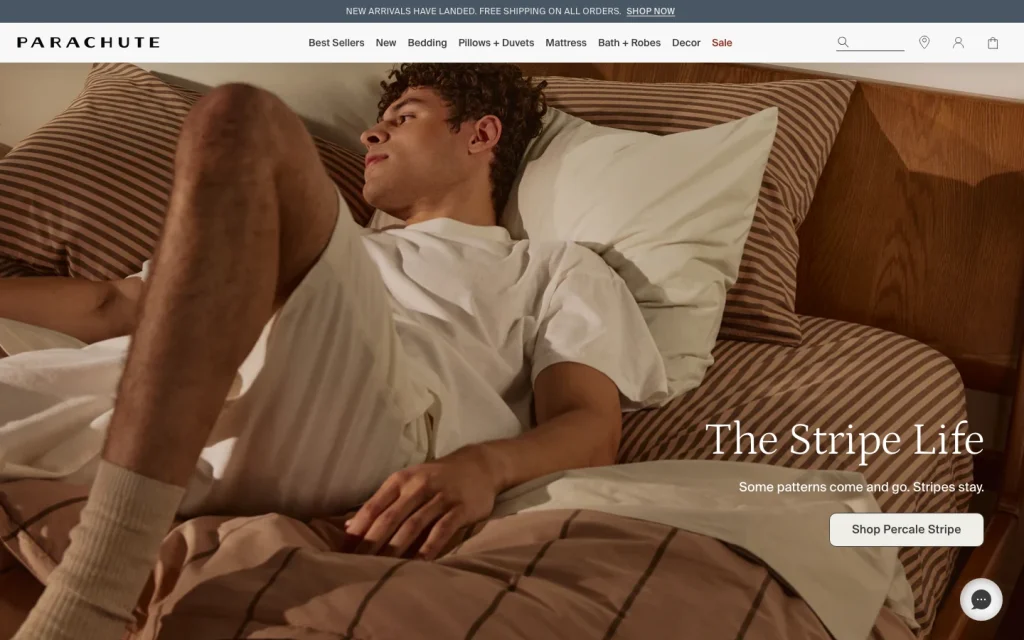
Parachute has mastered the art of lifestyle merchandising. Specializing in premium, eco-friendly bedding and bath essentials, their site feels less like a catalog and more like a high-end interior design magazine.
Key Lesson: Use authentic customer testimonials and detailed material sourcing stories to justify premium price points.
2. Brooklinen
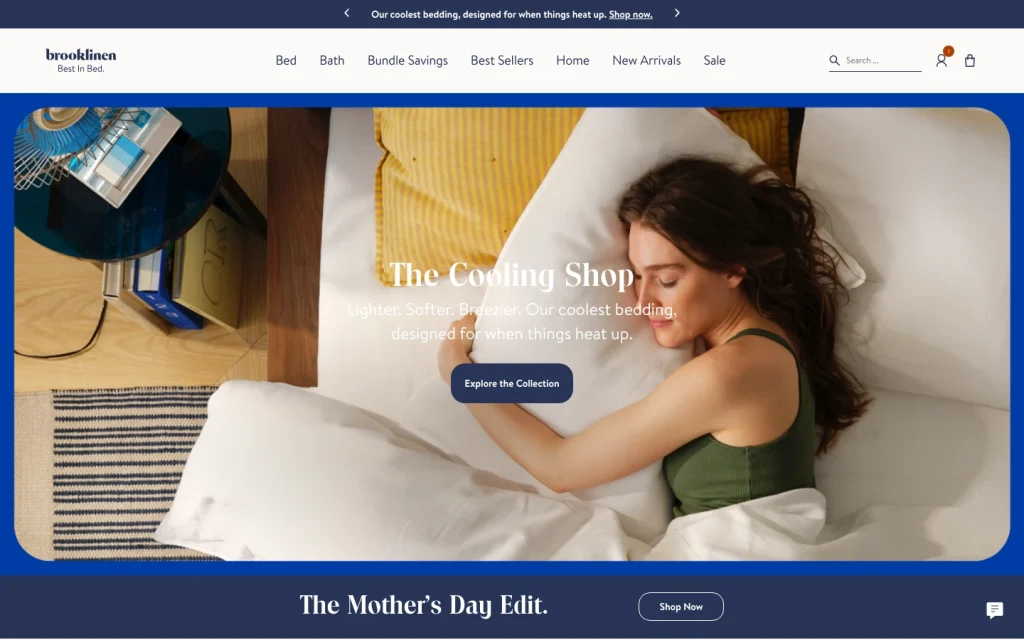
Brooklinen disrupted the bedding industry by offering luxury materials at direct-to-consumer prices. Their Shopify store is heavily optimized for conversion, utilizing urgency-driven promotions and intuitive product bundling.
Key Lesson: Offer “Hardcore Bundles” that allow customers to save money while simultaneously increasing your store’s average order value.
3. McGee & Co.
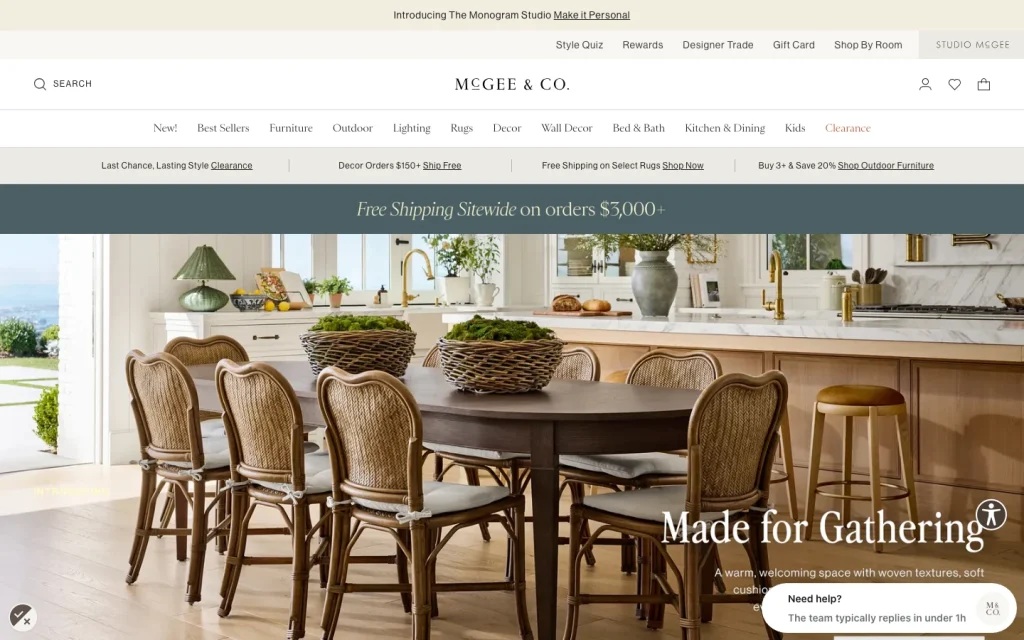
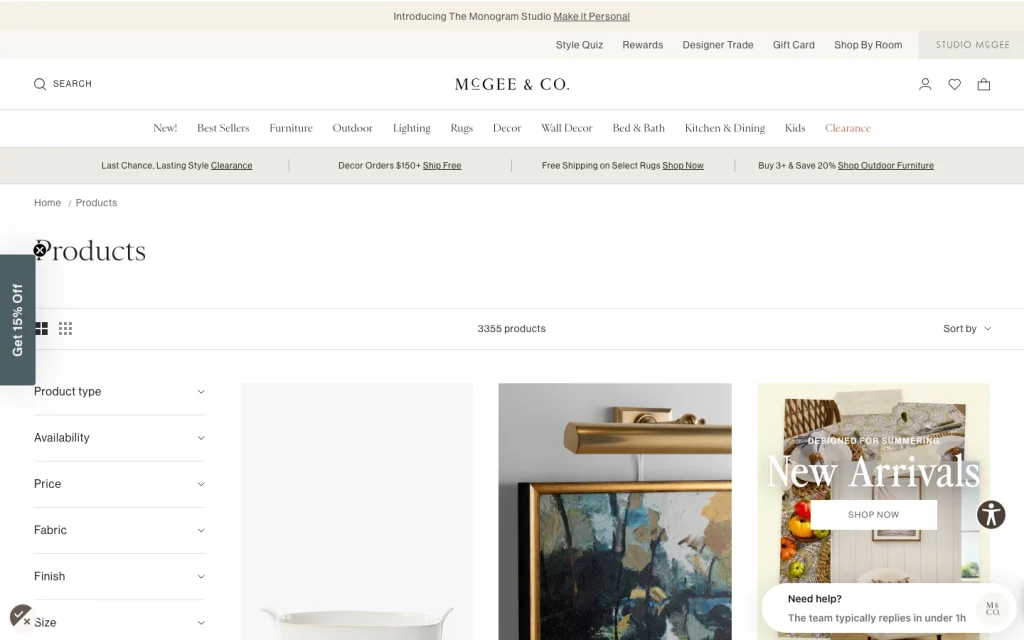
McGee & Co. Created by the renowned Studio McGee, this store blends traditional and modern aesthetics. They excel at content-driven commerce, seamlessly integrating their design portfolio and editorial blog with their product offerings.
Key Lesson: Utilize “Shop the Look” features to turn inspirational room photography into immediate, frictionless sales opportunities.
4. Burrow
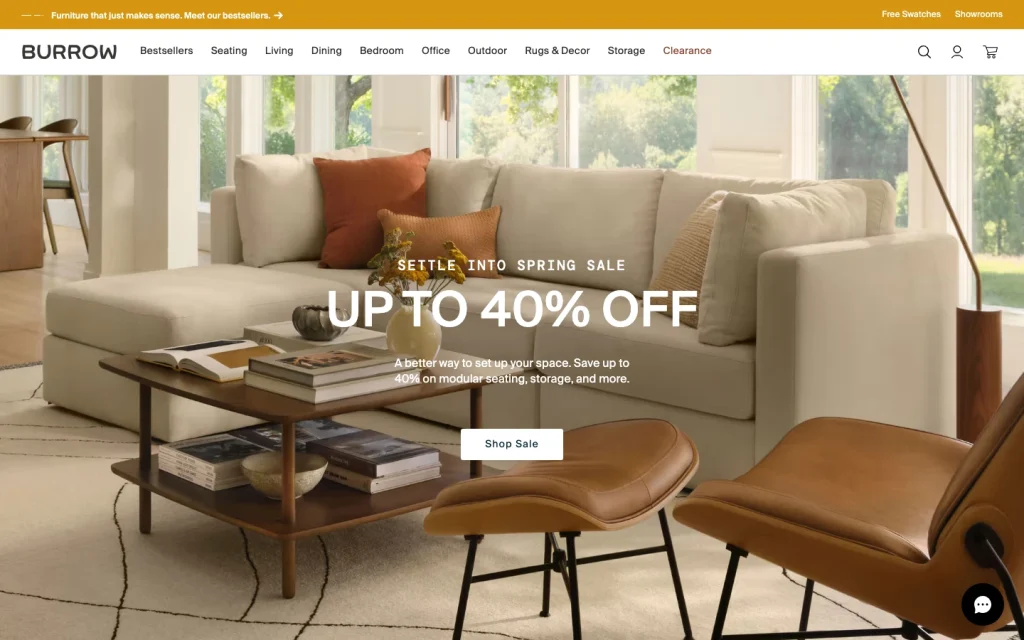

Burrow revolutionized the sofa buying experience by offering modular, easy-to-assemble furniture. Their site uses interactive 3D previews and highlights their FSC-certified sustainable materials.
Key Lesson: Identify the biggest friction point in your industry (e.g., moving heavy sofas) and build your digital messaging around how your product solves it.
5. Lulu and Georgia
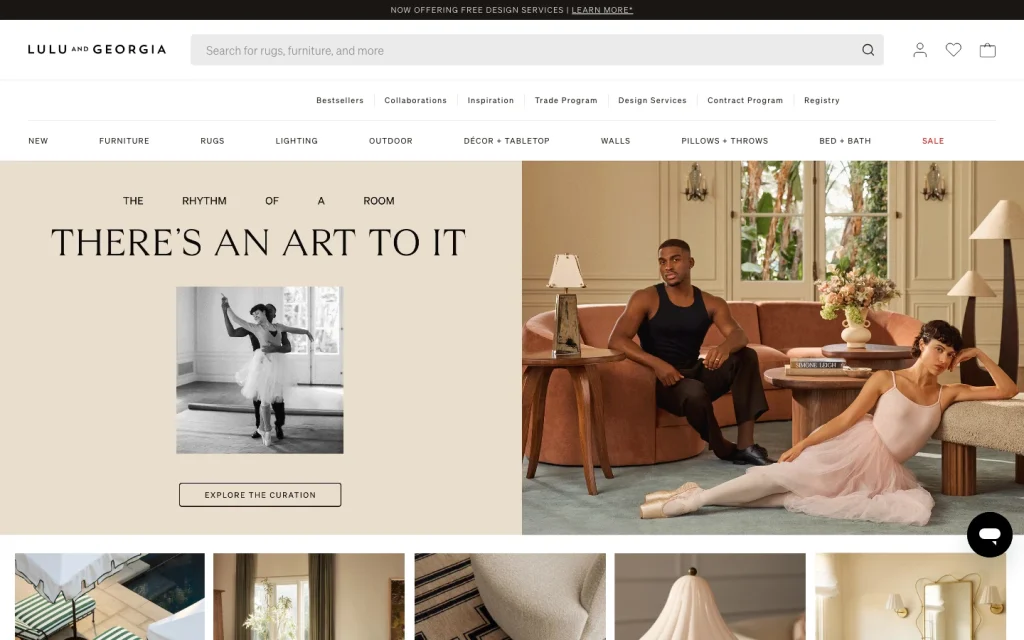
Lulu and Georgia caters to design-conscious shoppers with a refined mix of modern and vintage-inspired pieces. Their site navigation is impeccable, allowing users to filter by exact dimensions, colors, and design styles.
Key Lesson: Invest heavily in high-end, consistent visual branding to establish authority in the luxury home decor space.
6. The Citizenry

The Citizenry focuses on ethically sourced, artisan-crafted home goods from around the world. Their product pages feature the stories of the artisans who made the items, creating a deep emotional connection.
Key Lesson: Transparency and ethical sourcing are powerful marketing tools. Tell the story behind the product to differentiate yourself from mass-market retailers.
7. Jonathan Adler
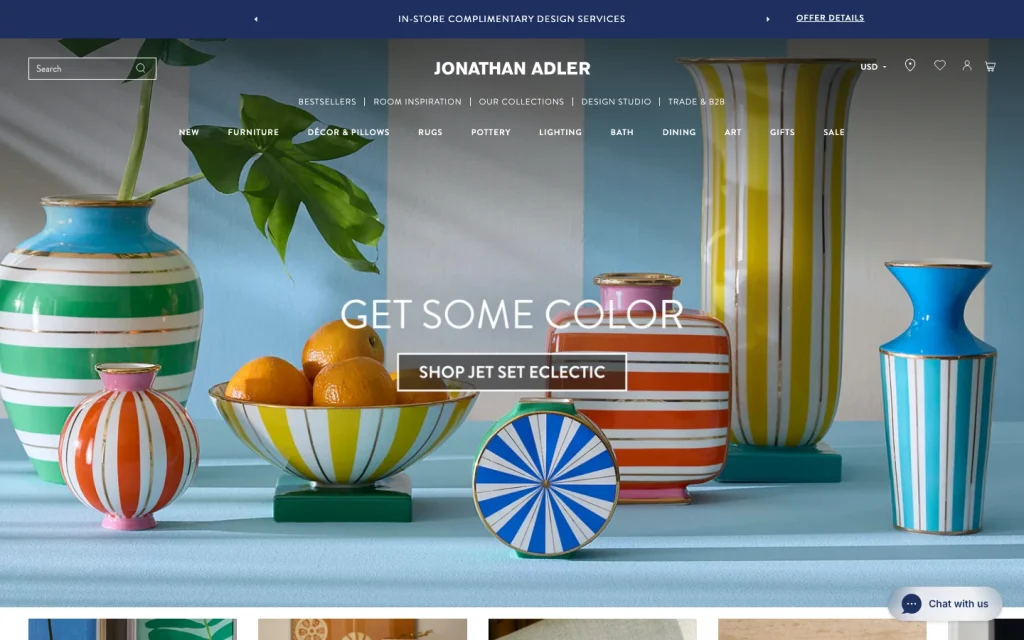
Jonathan Adler Known for modern American glamour, Jonathan Adler’s store matches its bold, colorful products with an equally vibrant website design. They use dedicated landing pages for specific collections to drive targeted ad traffic.
Key Lesson: Create bespoke landing pages for distinct product drops or aesthetic collections to improve ad relevance and conversion.
8. Ruggable


Ruggable solved a massive consumer pain point by inventing the machine-washable rug. Their Shopify store is laser-focused on this unique selling proposition, using videos and diagrams to explain exactly how the two-piece system works.
Key Lesson: If your product offers a functional advantage, demonstrate it visually above the fold on your homepage.
9. Leesa
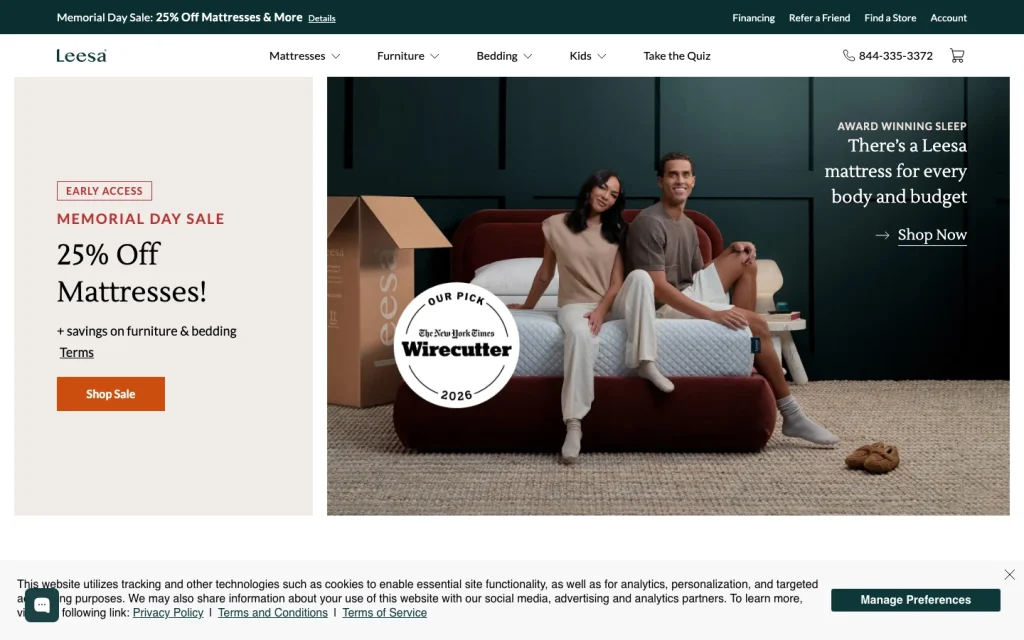
Leesa While primarily a mattress company, Leesa fits perfectly into the home comfort category. They leverage a strong social impact mission (donating one mattress for every ten sold) alongside a highly optimized, fast-loading Shopify Plus architecture.
Key Lesson: Integrating a genuine social mission into your brand narrative can significantly enhance customer loyalty and brand equity.
10. HORNE
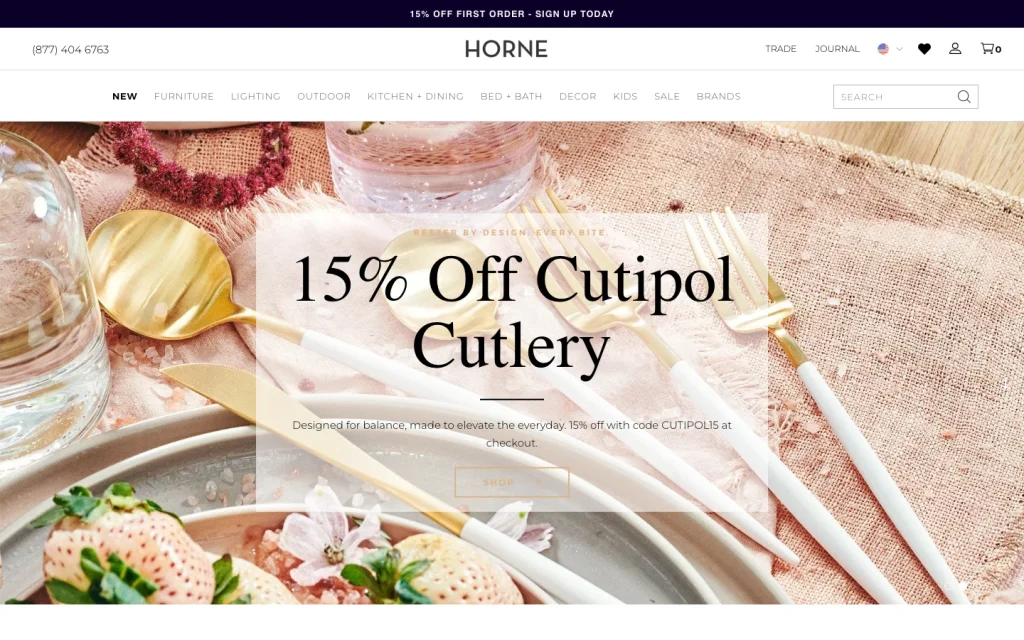
HORNE is a curated marketplace for authentic modern design. They separate themselves by acting as a strict gatekeeper of quality, only selling items from globally renowned, authentic design houses.
Key Lesson: Curation is a service. A smaller, highly vetted product catalog often converts better than a massive, overwhelming inventory.
11. Shoppe Amber Interiors

Shoppe Amber Interiors perfectly captures the “California casual” aesthetic. Their store relies heavily on lifestyle imagery, making the user feel as though they are walking through a beautifully designed, cohesive home.
Key Lesson: Ensure your typography, color palette, and photography style are perfectly aligned with the aesthetic of your target audience.
12. Revival Rugs
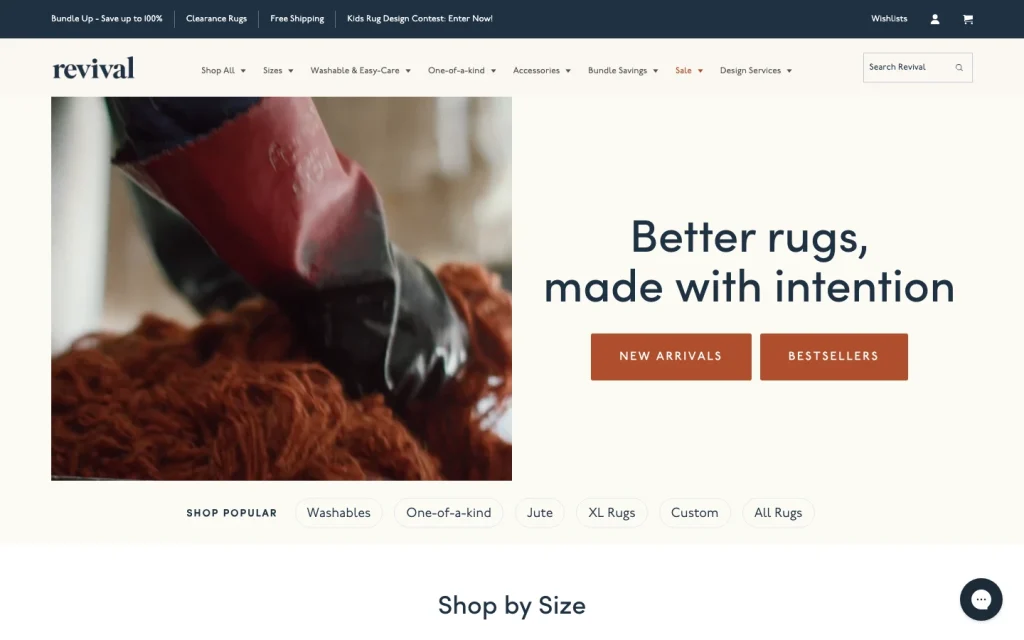
Revival Rugs offers both vintage and contemporary options. They excel in user navigation, allowing shoppers to filter highly specific parameters like rug size, exact color tones, and weaving techniques.
Key Lesson: For complex catalogs, an advanced, faceted search and filtering system is essential for product discovery.
13. Fyrn
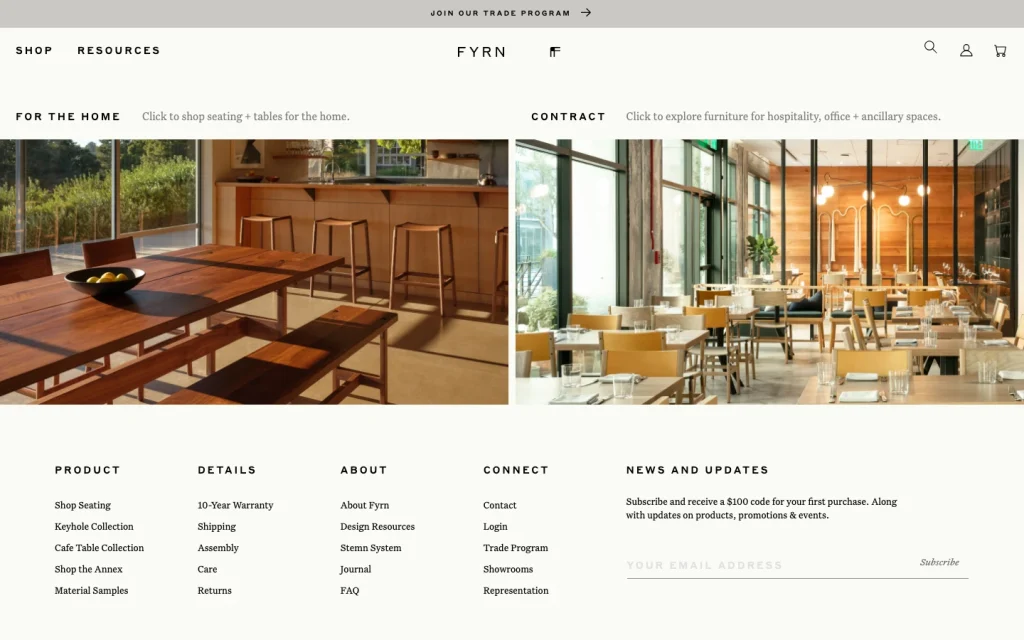
Fyrn makes high-end, modular seating designed to last a lifetime. Their store actively combats “fast furniture” greenwashing by offering replacement parts for their chairs, a commitment clearly outlined on their site.
Key Lesson: True sustainability is a powerful differentiator. If your products are built to last, make longevity a core pillar of your digital messaging.
All 13 Stores at a Glance
| # | Brand | Specialty | Standout UX feature | Pricing model |
|---|---|---|---|---|
| 1 | Parachute | Premium bedding & bath | Editorial lifestyle photography + material sourcing stories | Premium DTC |
| 2 | Brooklinen | Luxury DTC bedding | Hardcore Bundles + urgency promotions | Premium DTC |
| 3 | McGee & Co. | Editorial design-led decor | Shop the Look + content-driven commerce | Premium / luxury |
| 4 | Burrow | Modular furniture | Interactive 3D previews + tool-free assembly demos | Premium DTC furniture |
| 5 | Lulu and Georgia | Modern + vintage decor | Filter by dimensions, colors, design styles | Premium / luxury |
| 6 | The Citizenry | Ethically sourced artisan goods | Artisan stories on product pages | Premium |
| 7 | Jonathan Adler | Modern American glamour | Bespoke landing pages per collection | Luxury |
| 8 | Ruggable | Machine-washable rugs | Above-the-fold functional demonstration | Mid-market DTC |
| 9 | Leesa | Mattresses + bedding | Social-impact mission + Shopify Plus speed | Premium DTC |
| 10 | HORNE | Curated modern design | Strict curation = high product trust | Premium / luxury |
| 11 | Shoppe Amber Interiors | California-casual decor | Cohesive aesthetic typography + imagery | Premium / luxury |
| 12 | Revival Rugs | Vintage + contemporary rugs | Faceted search by size, color, weaving technique | Premium |
| 13 | Fyrn | Modular built-to-last seating | Replacement parts as anti-greenwashing signal | Premium furniture |
Key Lessons You Can Apply to Your Own Home Decor or Furniture Store
Analyzing these Shopify furniture store examples reveals a clear playbook for success. If you are preparing to launch or redesign your store, focus on these actionable takeaways:
Invest in High-Fidelity Visuals: You cannot over-invest in photography. Blend aspirational room shots with clinical, white-background images that show scale and texture.
Deploy AR and 3D Tools: Utilize Shopify’s native 3D model support. Allowing a customer to view a coffee table in their actual living room drastically reduces purchase hesitation.
Optimize the Post-Purchase Experience: For large items with long lead times, proactive communication is vital. Use automated email flows to keep customers updated on their freight delivery status.
Simplify Customization: If you offer bespoke furniture, use tiered, visual configurators. Do not overwhelm the user with 100 fabric choices at once; guide them through the process step-by-step.
Leverage Apps for Social Proof: Integrate robust review platforms that allow customers to upload their photos. Seeing a product in a real, unstyled home builds immense trust.
If implementing these features feels overwhelming, partnering with an agency that offers comprehensive Shopify store setup services ensures your technical architecture matches your design ambitions.
Is Home Decor a Good Niche on Shopify?
Yes, home decor is an exceptionally strong niche on Shopify. The market is evergreen, driven by continuous life events such as moving, renovating, and seasonal refreshing. The barrier to entry can also be relatively low if you utilize a dropshipping model for smaller decor items, though scaling into a highly profitable brand usually requires transitioning to a direct-to-consumer (DTC) inventory model.
Profit margins in the home decor sector generally range from 20% to 45% (Grand View Research home decor industry analysis), with high-end furniture commanding even larger margins. The key to sustaining profitability lies in mastering logistics—specifically, securing reliable freight partners for large items and keeping return rates low through accurate product descriptions and AR visualization tools.
Frequently Asked Questions About Home Decor and Furniture Shopify Stores
What’s the most successful Shopify store?
While success metrics vary, brands like Gymshark, Allbirds, and Fashion Nova are among the highest-grossing Shopify Plus stores globally. In the home decor specific sector, brands like Brooklinen, Parachute, and Ruggable lead the market with multi-million dollar annual revenues.
Can you sell home decor on Shopify?
Absolutely. Shopify is the premier platform for selling home decor. It offers robust inventory management, native support for 3D product models, and seamless integrations with freight shipping calculators, making it ideal for both small accessories and large furniture.
What is the best website for home decor ideas?
For pure inspiration, platforms like Pinterest, Architectural Digest, and Houzz are unmatched. However, top ecommerce sites like McGee & Co. and Shoppe Amber Interiors double as excellent inspiration hubs due to their editorial-style “shop-the-look” lookbooks.
What sells most in Shopify?
Across the entire platform, apparel, beauty products, and health supplements dominate volume. In the home goods category, smaller, easy-to-ship items like luxury bedding, wall art, decorative pillows, and machine-washable rugs are consistently top sellers.
What furniture stores use Shopify?
Many leading modern furniture brands rely on Shopify, including Article, Burrow, Castlery, Industry West, and Interior Define. They utilize Shopify Plus to handle high traffic volumes, complex product variations, and seamless B2B trade program integrations.
Do people sell furniture on Shopify?
Yes, selling furniture on Shopify is highly common and profitable. The platform supports complex product matrices (variations in fabric, size, and leg style), AR visualization, and custom shipping profiles necessary for handling heavy, oversized freight deliveries.
Do I need an LLC to run a Shopify store?
While you can legally start a Shopify store as a sole proprietor, forming an LLC is highly recommended. An LLC protects your personal assets from business liabilities, which is especially important when selling physical products like furniture that carry higher financial risks.
What makes a home decor Shopify store successful?
Success stems from high-quality lifestyle photography, intuitive navigation by room or style, transparent shipping policies, and tools that build buyer confidence, such as customer photo reviews, material swatches, and 3D augmented reality product visualizers.
Which Shopify features matter most for selling furniture and home decor online?
The most critical features include native 3D/AR model support, advanced product filtering (by size, color, and material), custom shipping profiles for freight, and flexible payment gateways offering Buy Now, Pay Later (BNPL) options for high-ticket items.
Conclusion
Creating one of the best home decor Shopify stores requires a delicate balance of art and science. By prioritizing a frictionless user experience, investing in immersive visual merchandising, and transparently addressing the logistical realities of shipping home goods, you can build a brand that commands loyalty and drives consistent revenue.
The examples highlighted in this guide prove that with the right technical foundation and strategic vision, online merchants can successfully replicate—and often exceed—the traditional showroom experience. If you are ready to elevate your ecommerce presence, streamline your operations, or build a high-converting digital storefront from the ground up, explore professional development solutions to ensure your brand reaches its full potential.